Japanese American incarceration at Rohwer and Jerome during WWII


A BRIEF HISTORY
Full length footage
During WWII, the U.S. government forcibly removed over 120,000 Japanese Americans from their homes on the West Coast. They were incarcerated in camps throughout the nation's interior, where many remained until the end of the war. While eight of the camps were in the remote reaches of the American West, two of the camps were located in the rural swampy flatlands of southeast Arkansas.
The camps at Rohwer and Jerome were each built on approximately 10,000 acres of federally owned lands in need of drainage and clearing. Each camp core consisted of 500 acres of tar-papered buildings arranged in military style, surrounded by guard towers and barbed wire. By the beginning of 1943, these camps became two of the largest cities in the region. For reference, the neighboring town of McGehee had a population of 3,700 in the 1940 census. The peak population for Jerome and Rohwer in early 1943 was 8,497 and 8,475, respectively.
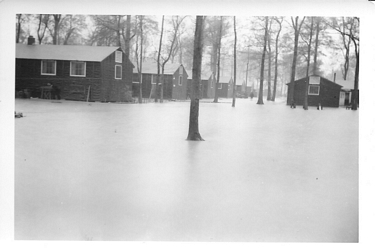
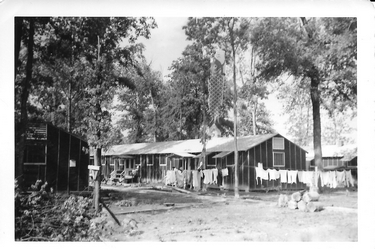
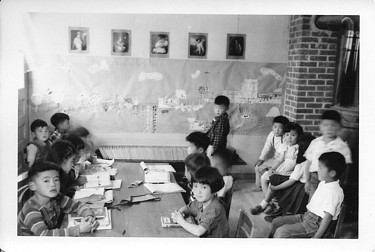
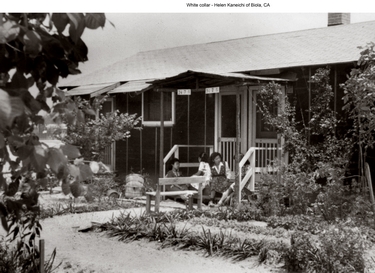
Throughout the fall of 1942, Japanese Americans arrived at both Rohwer and Jerome to find that the camps were not finished. Buildings were partially constructed, barracks were largely unfurnished, and the land was a barren, soupy mess. Immediately, incarcerees began to improvise to make furniture from scrap lumber and to make their apartment spaces livable. Over time, living conditions continued to improve due to the hard work and persistence of incarcerees who eventually planted victory and flower gardens in their yard spaces and erected make-shift basketball goals in community areas. Camp administration encouraged the formation of incarceree-led newspapers, co-ops, religious organizations, sports teams, and more. There were numerous social clubs in school, such as scouts, band, and art and adult education, as well as employment opportunities. Life was anything but normal. However, the incarcerated Japanese Americans strove to make the best of the unjust circumstances that forced them to call Arkansas home during the war.
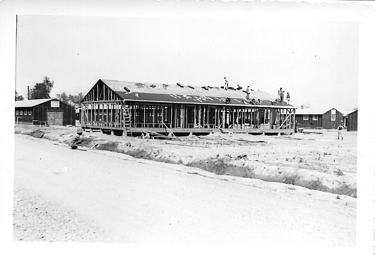

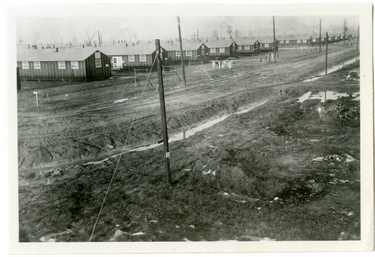
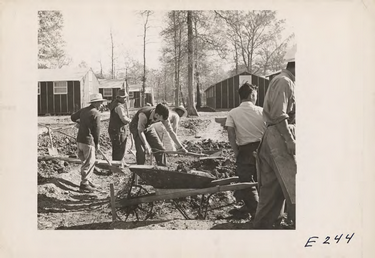
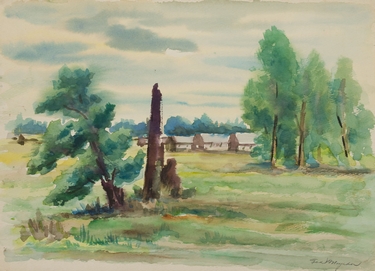
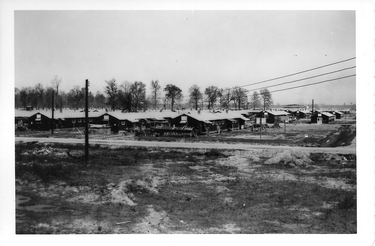
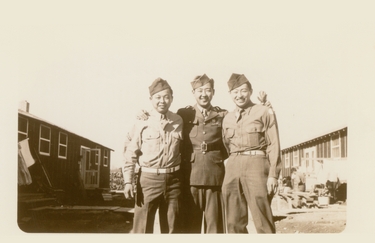
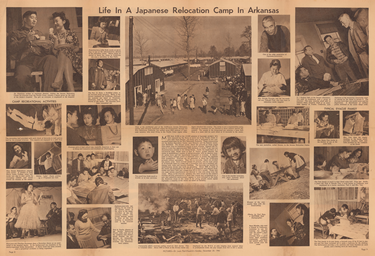
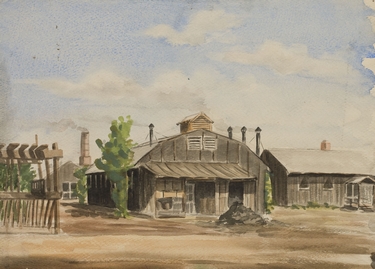
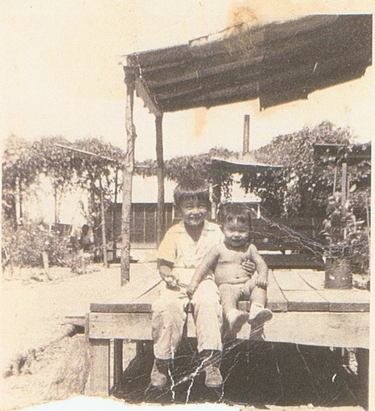
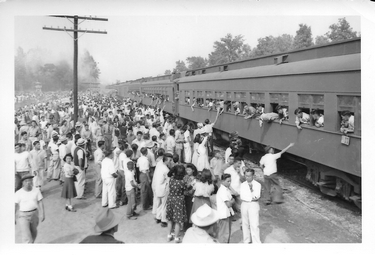
In September 1945 the war finally ended, and just as quickly as the camps were built, people left, buildings were sold, and the land was left vacant. Locals began farming the fields that had been drained and improved by incarcerees, and the concrete foundations that were once used for the block mess halls, recreation halls, and other buildings were removed with time. Today, at Rohwer and Jerome, the smokestacks for the camp hospitals are the most prominent visual reminder of where each camp once stood. In 1992, the Rohwer memorial cemetery was declared a National Historic Monument, and the site of the Jerome concentration camp was added to the Arkansas Register of Historic Places in 2010.
WHERE TO START?
Many Americans know little about this period of Japanese American incarceration in our nation's history. With the cooperation of numerous Arkansas institutions, feedback from the former incarceree community, and support from the National Park Service - Japanese American Confinement Sites program, this website has been created as an educational resource to promote a better understanding of the experiences of those who were unjustly incarcerated in Arkansas. Each section of the site has been created to help tell a part of that story.
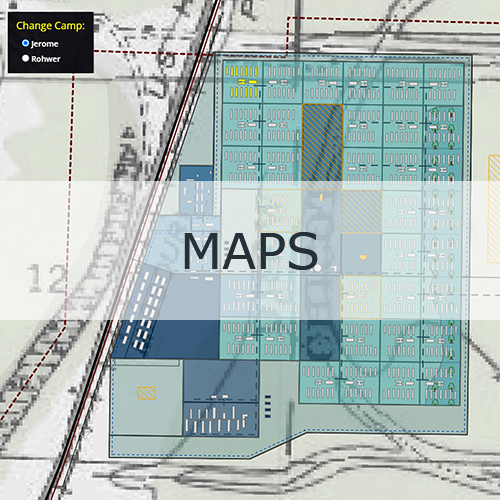
For an overview of the incarceration period from 1942-1945, start with the interactive maps. A narrative on the left guides the user through major topics beginning with forced relocation in 1942 and ending with what each camp landscape looks like today. The maps update with new interactive content when a topic or chapter is selected. Users are encouraged to click and explore each map to find pictures, videos, and other media that help bring the story to life.
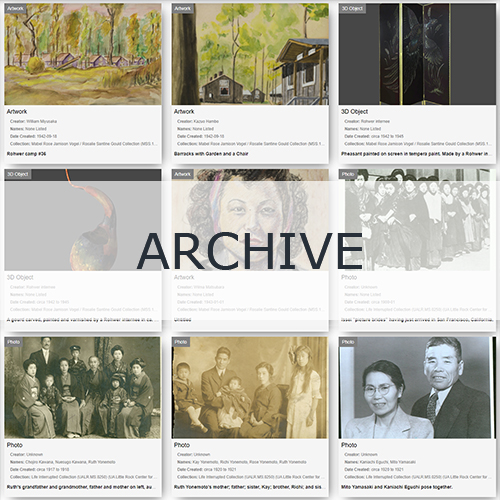
Next, explore thousands of unique items in the archive. Items include autobiographies written by high school students, camp artwork, excerpts from camp newspapers, yearbooks, articles from local newspapers, and incarceree interviews. Each item provides a unique reflection of camp life. The Rising Above archive contains materials from six Arkansas institutions and multiple personal collections. Use the Filters tool located at the upper right to filter by date, item type, camp, or even the names of individuals who were incarcerated in the camps.

The Connections graphs, organized by camp, provide a unique window to the archive. The graphs focus on the social connections between people that are connected to one another through items in the archive. Individuals are symbolized with blue nodes, and items are symbolized with different colors according to item type. The larger the node, the more connections it has. The search option in the upper right allows for a quick search by name or subject of interest.
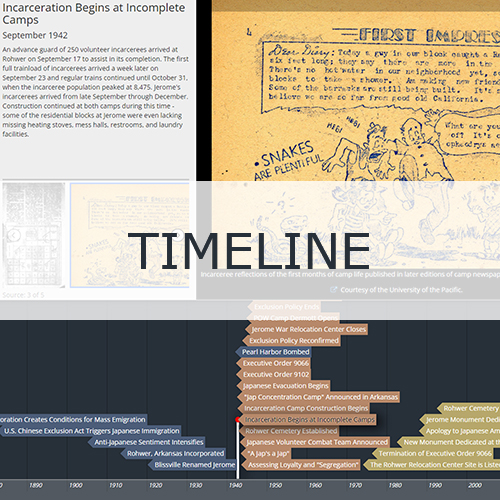
The timeline provides a broader context for understanding the events that led up to and followed the incarceration of Japanese Americans in WWII. It reviews over 150 years of history, beginning with the opening of Japan to trade with the U.S. (under threat) in 1853, followed by a mass immigration of Japanese to the Kingdom of Hawaii and the western U.S. Key events including the racially motivated Immigration Act of 1924 and the bombing of Pearl Harbor that lead to the mass incarceration of Japanese Americans during WWII. A formal apology isn't issued until 1988 by President Ronald Reagan.
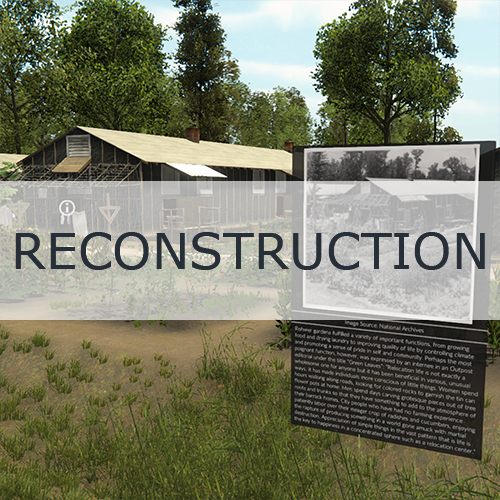
The 3D reconstruction is an educational gaming environment that provides users with a first-person perspective of a residential block in the Rohwer concentration camp. Users can "virtually walk around" or take a guided tour that guides them through a series of information points that provide additional media and information about camp life. All materials are supported by historical research and primary sources. For more information on how the 3D reconstruction was created, visit the About page.

Access lesson plans designed for secondary education (grades 7-12) to bring the subject of Japanese American incarceration in Arkansas to your classroom. Use the Rising Above in Arkansas website in combination with other web resources to engage students in learning about a part of our nation's history that is often overlooked. Students will view an educational 3D reconstruction of the Rohwer camp and examine primary source materials available in the Rising Above archive. All lesson plans align with Arkansas Academic Standards and are designed for use across multiple subjects.

Editor, Jerome Remembrance Book